
Custom Stencils Australia: The Complete Guide to Materials, Design, and Durability
A stencil that snaps mid-job isn't just a minor annoyance; it's a direct hit to your project’s bottom line and professional reputation. Recent industry data shows that 35% of low-grade plastic stencils warp or tear within the first 48 hours of heavy use, costing you time and materials. You probably agree that finding high-quality custom stencils australia wide often feels like a gamble between fragile imports and overpriced alternatives. It's frustrating to wait 21 days for a delivery only to find the material is too thin for your specific road or warehouse surface.
We're here to eliminate that uncertainty by showing you how to select professional-grade materials that survive 500 plus applications and arrive at your site in days. You'll learn exactly which thickness suits your specific application, whether you're marking a loading dock or branding a local cafe wall. This guide breaks down the essential differences between Mylar and stainless steel while explaining how to prep your vector files for a perfect laser cut every time. We've simplified the ordering process so you can move from a digital design to a physical tool without the typical three-week lead time found elsewhere.
Key Takeaways
- Understand the logistical advantages of Australian-made manufacturing, including faster turnaround times and rigorous local quality control for every project.
- Identify the best materials for your specific environment by evaluating factors like UV resistance, chemical durability, and material memory for easy storage.
- Learn how to prepare your artwork for precision laser cutting by mastering vector formats and the essential structural role of "bridging" in letter design.
- Discover how professional custom stencils australia can be adapted for diverse industries, ranging from heavy-duty road marking to specialized food-grade branding.
- Gain expert insights on choosing between plastic and galvanized steel to ensure your stencil delivers consistent, professional results across multiple applications.
What are Custom Stencils and Why Does Local Manufacturing Matter?
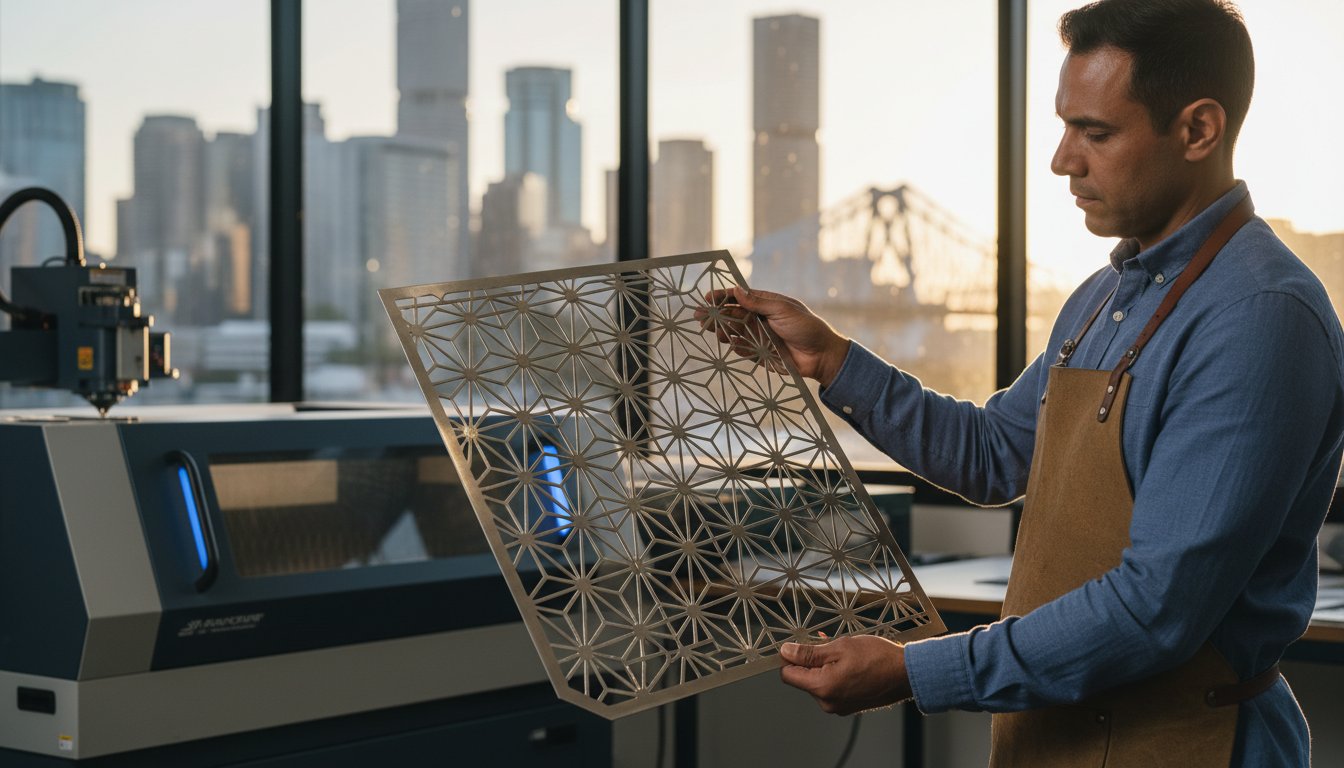
A custom stencil is a precision-cut template designed to replicate specific logos, text, or patterns onto almost any surface with mathematical accuracy. To understand the foundational mechanics of this tool, you can explore what is a stencil? and how it has evolved from early manual applications to modern industrial standards. Today, the process has shifted from hand-cut oiled card to high-powered CO2 laser and CNC technology. We use 1,000-watt lasers to achieve tolerances as tight as 0.1mm, ensuring that even the most complex vector files are translated into a physical tool without losing detail.
The manufacturing process has undergone a massive transformation over the last 15 years. Traditional methods were labor-intensive and prone to human error, whereas modern digital fabrication allows for perfect repeatability. This evolution means a business can order a stencil today and receive a product that matches their digital brand guidelines exactly. Whether it's a 1.2-meter high-vis marker for a loading dock or a 50mm brand mark for a boutique cafe, the technology ensures the final spray-painted result looks professional rather than DIY.
Choosing to source custom stencils Australia wide provides a logistical edge that international suppliers can't match. Local manufacturing typically cuts lead times from 21 days down to just 2 or 3 business days. Beyond speed, there's the critical factor of quality control. When you buy Australian-made, you're getting materials tested for our specific climate and UV conditions. It's also a matter of economic impact; for every A$100 spent with a local manufacturer, a much larger portion stays within the domestic economy compared to offshore purchases. This proximity allows for direct communication, ensuring that technical details like "bridge pieces" are correctly placed so your design doesn't fall apart during the first use.
Applications for these tools are diverse, spanning from high-volume industrial road marking to delicate food-grade branding. In 2023, approximately 60% of our production volume focused on warehouse safety and civil works, while the remaining 40% served creative sectors like interior design and hospitality. This versatility makes the custom stencil one of the most cost-effective branding tools available in the current market.
The Benefits of Professional Custom Fabrication
Professional fabrication ensures total brand consistency across multiple locations. While a DIY cardboard cutout might last for one or two sprays, a professional 1.4mm polypropylene or 250-micron Mylar stencil can survive 50 to 100 applications if cleaned correctly. This durability drives a high ROI. For example, hiring a professional sign writer to paint a logo at 10 different sites might cost upwards of A$3,000. In contrast, a reusable custom stencils Australia kit might cost A$180, allowing your own team to complete the work with identical results at a fraction of the price.
Industrial vs. Creative Stenciling
Your project scale and surface texture dictate your stencil requirements. A one-off event might only need a lightweight PVC template, but a 10-year council maintenance plan requires 3mm laser-cut steel or heavy-duty zinc. Surface texture is the most important variable; rough bitumen requires a thicker, heavier material to prevent "underspray" or paint bleed. Smooth timber or glass allows for thinner, flexible materials that create a tighter seal. Having access to Australian-based support means you can troubleshoot these technical specs with a local expert before you commit to a large-scale production run.
Choosing the Right Stencil Material for Your Australian Environment
The Australian climate presents unique challenges for stencil durability. UV exposure in Queensland often reaches extreme levels, which can cause inferior plastics to become brittle and crack within weeks. High-quality custom stencils australia manufacturers prioritize UV-stabilized materials to prevent this degradation. Beyond the sun, you've got to consider chemical resilience. If you're cleaning your stencil with harsh mineral turps or thinners after every use, the material must withstand that exposure without softening or losing its edge definition. A material that reacts with solvents will quickly lose its precision, resulting in blurry, unprofessional markings.
Material memory is another practical concern for tradespeople and site managers. If you store a large stencil rolled up in a 100mm PVC tube, a material like polypropylene will lay flat almost immediately once unrolled. Cheaper alternatives often retain a curl, making it difficult to get a crisp seal against the floor or wall. For road crews, heat resistance is the priority. Bitumen temperatures during application can hit 180°C, which would melt standard thin plastics instantly. In these cases, 3mm HDPE or galvanized steel is the only viable choice to ensure the stencil doesn't warp mid-job.
Plastics: Polypropylene, HDPE, and Mylar
Polypropylene is the workhorse of the Australian industrial sector. It's lightweight, solvent-resistant, and incredibly tough. A 1.4mm polypropylene sheet is perfect for warehouse safety markings or pallet branding. It's thick enough to stay flat under its own weight but light enough for one person to move easily. For food producers marking crates or packaging, checking Food-grade branding regulations ensures your chosen plastic won't leach chemicals into the supply chain. HDPE (High-Density Polyethylene) is the heavy-duty sibling, used primarily for council road markings where the stencil needs to withstand repeated impact from heavy spray equipment. Mylar, typically 250 microns thick, is reserved for high-precision work. It's the best choice for intricate logos or body art because it's flexible enough to wrap around curved surfaces without snapping.
Metals: Galvanized Steel, Brass, and Zinc
Metal stencils offer a level of permanence that plastics can't match. 1.6mm galvanized steel is the standard for harsh industrial environments like mines or construction sites where physical impact is frequent. It won't dent easily and can handle the highest heat applications without warping. Brass and zinc are often used for interlocking stencil sets. These are ideal for logistics companies that need to change serial numbers or dates quickly. Magnetic stencils are a specialized solution for the shipping industry. They're made from a flexible magnetic sheet that snaps onto steel containers or machinery, providing a perfect seal that prevents paint bleed on vertical surfaces. This is a massive time-saver for marking large fleets of containers. If you're unsure which grade fits your specific project, you can view our material specifications to compare durability ratings. Investing in the right material for custom stencils australia ensures your marking kit lasts for 1,000+ applications rather than failing after the first ten uses.

Applications: From Road Marking to Food-Grade Branding
By 2026, the application of precision marking has moved far beyond simple "No Parking" signs. Brisbane businesses now use custom stencils australia to solve complex logistical and branding challenges with high-speed accuracy. Whether it's a 1200mm directional arrow for a multi-level shopping centre or a 50mm logo for a boutique coffee roaster, the specific application dictates the design and material choice. Modern laser cutting allows for a level of detail that was impossible a decade ago, enabling intricate patterns to be applied to almost any surface imaginable.
A common mistake is assuming that one stencil material fits every single job. This misconception often leads to bleed-under or premature wear. Heavy-duty 1.6mm zinc is the standard for repeated bitumen marking in high-traffic areas, yet it's entirely unsuitable for a curved coffee canister or a delicate timber crate. Data from our production floor shows a 35% increase in stencil lifespan when clients match the substrate to the specific material grade, such as using flexible 250-micron Mylar for contoured surfaces or solvent-resistant plastics for industrial paints.
Industrial and Road Safety Stencils
Road safety in Queensland relies on high-visibility markings that meet strict Australian Standards like AS 1742.2. We produce precision templates for disabled parking bays, speed limits, and pedestrian crossings that ensure car parks remain compliant and safe. These stencils are designed for rapid deployment, allowing contractors to mark out an entire 200-space car park in a single shift without sacrificing crisp edges or icon clarity.
Inside the warehouse, clear communication prevents accidents. Following Safe Work Australia's code of practice for machinery safety is essential for managing risks around moving plant and equipment. Our industrial stencils mark out forklift exclusion zones, "Keep Clear" areas, and PPE reminders directly onto concrete floors. For asset management, logistics firms use our interlocking number and letter sets to identify over 500 shipping containers or pallets, ensuring that tracking codes remain legible through years of sun exposure and heavy handling.
Commercial Branding and Food-Grade Solutions
Branding needs to be consistent across every physical touchpoint to build trust. Laser-cut logo stencils allow a business to mark 100 timber crates or 50 cardboard shipping boxes in under 45 minutes, providing a rustic yet professional aesthetic that stickers can't match. This approach is particularly effective for Brisbane wholesalers who need to maintain a premium brand presence while keeping packaging costs low. Using custom stencils australia ensures that the bridge pieces in your logo are placed strategically, so the final image looks like a solid graphic rather than a series of disconnected shapes.
For the hospitality sector, we manufacture stencils from food-grade materials that are safe for direct contact with consumables. These are frequently used by local bakeries for dusting flour patterns onto sourdough or by baristas for cocoa art on specialty lattes. At a 2025 South Bank marketing activation, one client used our temporary floor stencils to guide 2,500 visitors toward their pop-up shop using eco-friendly chalk spray. This method provides high-impact visibility for festivals and events without leaving permanent marks on public infrastructure.
The Design Process: Preparing Your Artwork for Laser Cutting
Precision laser cutting requires specific digital blueprints to produce a clean result. The quality of your finished product depends entirely on how you prepare your artwork. High-quality custom stencils australia start with a clear understanding of how light and physical material interact. Follow these five steps to ensure your design is production-ready and functional for your specific application.
Step one involves file selection. You must use vector files rather than raster images. Vector formats like .AI, .EPS, or .PDF use mathematical paths to define shapes. This allows the laser to follow a precise line. Raster files, such as .JPG or .PNG, consist of pixels that become blurry when enlarged. If you provide a raster file, it usually requires a manual redraw, which can delay your project by 24 to 48 hours.
Step two is the most technical phase: bridging. You've likely noticed small gaps in stencil letters. These are "bridges" or "tabs." They hold the internal parts of letters, like the center of an "O" or "A," in place. Without these supports, the center pieces-known as islands-simply fall out once cut. We recommend a minimum bridge width of 2mm for small stencils and up to 10mm for large-scale industrial markings to maintain structural integrity.
Step three focuses on visibility and scale. Distance determines size. If your stencil is for a warehouse floor and needs to be visible from 20 metres away, your characters should be at least 150mm tall. For handheld items or small crates, 25mm text is usually sufficient. Always consider the viewing distance before finalizing your dimensions.
Step four requires setting an appropriate margin. This is the "dead space" around your design that protects the rest of your surface from paint. A standard 50mm margin is effective for most spray applications. If you're using a high-pressure spray gun, increase this to 100mm to prevent messy overspray from ruining your work.
Step five is choosing the right material thickness. We offer various gauges to suit different tools. A 0.2mm Mylar is perfect for curved surfaces or fine brush work because it's highly flexible. For heavy-duty industrial use on concrete or timber, a 1.5mm or 2mm Polypropylene is better. It's heavy enough to lay flat under its own weight and resists the pressure of industrial spray equipment.
Technical Specifications for Stencil Makers
Vector files are the industry standard because they provide the laser with a clear "cut path." We prefer .EPS or .AI files with all fonts converted to outlines. This prevents any formatting errors when we open your file. Your design must maintain a minimum line thickness of 2mm. Anything thinner becomes too fragile, causing the stencil to flop or tear during cleaning. We strategically place bridges to balance the aesthetic of your logo with the physical strength of the material.
Ordering Your Stencil Online
Our online quote tool simplifies the procurement process. You can input your custom dimensions and select your preferred material to receive an instant price in AUD. Once you approve the proof, we move to production at our Moorooka manufacturing facility in Brisbane. We maintain a strict 3-day turnaround promise for most orders. While we're based in Queensland, we provide reliable national shipping to Sydney, Melbourne, and Perth, ensuring your custom stencils australia arrive ready for work within days.
Ready to start your project? Use our intuitive tool to order your custom stencil online today.
Why Choose Stencils Online for Your Custom Projects?
Stencils Online has refined the art of precision manufacturing since 2004. We've spent over 20 years perfecting our laser cutting processes to serve a diverse range of Australian industries. We don't just sell products; we manufacture them. Our facility in Moorooka, QLD, serves as the central hub for our national operations, ensuring that every order for custom stencils australia meets our rigorous internal standards before it leaves the floor. This local presence allows us to provide genuine technical support that overseas resellers simply cannot match.
Material selection is the foundation of a successful stencil project. We stock a comprehensive inventory that ranges from 0.5mm food-grade plastics for culinary branding to 1.6mm galvanized steel for heavy-duty industrial marking. Whether you're marking shipping containers in a Brisbane port or etching logos onto delicate pastries, we have the specific substrate required for the job. Our team helps you avoid the common mistake of over-specifying materials, which keeps your project costs down while ensuring the tool lasts for its intended lifespan.
Being based in Moorooka means we understand the logistical needs of Australian businesses. We provide rapid national support and streamlined shipping to every corner of the country. Our expertise isn't limited to the machinery; it extends to the practical application of the product. We've completed over 15,000 custom projects, giving us the insight to advise you on bridge placement, font legibility, and paint compatibility. You'll get a solution that works the first time, preventing wasted materials and downtime on your site.
The Stencils Online Quality Guarantee
Precision is our baseline. We utilize the latest CNC laser technology to achieve a cutting tolerance of 0.2mm, ensuring perfectly crisp edges even on complex logos. Our materials undergo durability testing to ensure they withstand the harsh 40-degree Australian summer heat without warping or becoming brittle. Because you're buying direct from the manufacturer, you'll save an average of 20% by eliminating middleman markups. We control the entire supply chain from raw sheet to finished stencil.
Getting Started with Your Custom Order
Starting a project is straightforward. You can contact our team directly for a bespoke quote or professional design advice regarding your vector files. If you need a standard solution, we maintain a vast range of pre-designed alphabet and number sets ready for immediate dispatch. These sets are ideal for warehouse bay marking or car park numbering. Order your custom stencils today and experience our industry-leading 3-day turnaround. We'll turn your digital design into a durable, physical tool that delivers consistent results for years.
Take the Next Step Toward Precision Branding
Selecting the right material ensures your project survives the harsh Australian environment and repeated industrial use. Whether you're handling large-scale road marking or intricate food-grade branding, precision laser cutting provides the sharp, clean edges necessary for a professional result. Investing in custom stencils australia means you're choosing a product engineered for durability and local site conditions.
At Stencils Online, we back every project with 20 years of industry experience and a commitment to high-quality craftsmanship. We understand that timing is critical for your operations, which is why we provide a fast 3-day turnaround on our Australian Made and Owned products. Our team focuses on practical solutions that simplify the transition from your digital artwork to a finished tool ready for the job site.
Don't let poor quality materials slow down your workflow. Get a Fast Quote on Custom Stencils today and experience the reliability of locally manufactured precision. We look forward to helping you achieve a seamless, professional finish on your next project.
Frequently Asked Questions
How long does it take to get a custom stencil made in Australia?
Most orders for custom stencils in Australia ship within 3 business days after you approve the final design. Our precision laser cutting process allows us to maintain a 98% on-time production rate for all local clients. If you need your stencil faster, express shipping via Australia Post usually delivers to major cities like Brisbane or Sydney within 24 to 48 hours. We prioritize local manufacturing to ensure you get your tools without the long wait times associated with international shipping.
What is the best material for a reusable parking lot stencil?
Heavy-duty 1.5mm or 3mm Polypropylene is the industry standard for reusable parking lot stencils. This material resists the harsh chemicals in line-marking paints and withstands repeated use on abrasive bitumen or concrete. Unlike thinner materials, these 3mm sheets lay flat under their own weight to prevent paint bleed during application. You can expect to get over 500 applications from a single industrial-grade HDPE stencil when handled and cleaned correctly.
Can you make a stencil from my business logo?
Yes, we can convert your business logo into a functional stencil using your existing vector files. Send us your artwork in .AI, .EPS, or high-resolution .PDF formats so our team can prepare it for laser cutting. We adapt your design to ensure all elements are connected and durable for repeated use. This service turns your branding into a reusable tool for marking crates, walls, or pavement across your Brisbane job sites.
Do I need a special type of paint to use with my stencil?
You don't need one specific paint, but your choice should match the surface material and application method. Use fast-drying aerosol sprays for vertical walls or specialized line-marking paint for asphalt and concrete surfaces. We recommend applying paint with a high-density foam roller or a dedicated stencil brush to prevent underspray. Keeping your paint application light and building up thin layers prevents liquid from seeping under the edges of the Mylar or plastic sheet.
What are stencil "bridges" and why are they necessary?
Bridges are the small tabs of material that connect the "island" parts of a design to the main stencil sheet. Without bridges, the center of a letter like "O" or "B" would simply fall out during the laser cutting process. Our designers strategically place these 1mm to 3mm tabs to maintain structural integrity while ensuring your final image remains legible. They're a functional necessity in every professional stencil design to keep the template in one piece.
Are your plastic stencils food-safe for coffee or cakes?
Yes, our 190-micron Mylar stencils are food-safe and comply with Australian standards for contact with consumables. This material is non-porous and easy to sanitize, making it perfect for dusting cocoa on coffee or icing sugar on cakes. Since Mylar is flexible and durable, it wraps easily around curved surfaces like canisters or small baked goods. Many Brisbane cafes use these custom tools to add consistent branding to their daily beverage service.
How do I clean and store my custom stencil to make it last?
Clean your stencil immediately after use before the paint has a chance to harden. Use warm soapy water for water-based paints or the appropriate solvent for oil-based inks and aerosols. Once dry, store the stencil flat between two sheets of cardboard to prevent the fine details from snagging or bending. Proper maintenance can extend the life of a Mylar stencil to over 100 uses, providing excellent value for your investment.
Do you ship custom stencils to rural areas in Western Australia or the NT?
We ship to every corner of Australia, including remote regions in Western Australia and the Northern Territory. Orders are dispatched from our facility using Australia Post or specialized couriers to ensure reliable delivery to your door. Standard shipping to rural areas typically takes 5 to 7 business days depending on your specific location. Because we're an Australian Made and Owned company, we understand the logistics of reaching regional mining sites and agricultural hubs across the country.